
Why does choosing the right air conditioning system matter?
An air conditioner is a long-term purchase that you will run for many years. The type and size you choose decide how comfortable each room is, what you pay to run it every summer, and how much of the house you can cool at once. Getting it wrong is expensive to undo.
There are plenty of options on the market, from single wall splits to whole-home ducted systems. This guide walks through the questions we ask on every Gold Coast and Northern Rivers quote so you can compare systems on the things that matter: size, efficiency, features, installation and warranty.
How do you work out your cooling needs?
Look at three things: the size and layout of your home, the local climate, and which rooms you actually use and when. Together they tell you how much capacity you need, where it needs to go, and whether zoning or separate units will give you the most control for the least running cost.
Evaluate your home’s size and layout
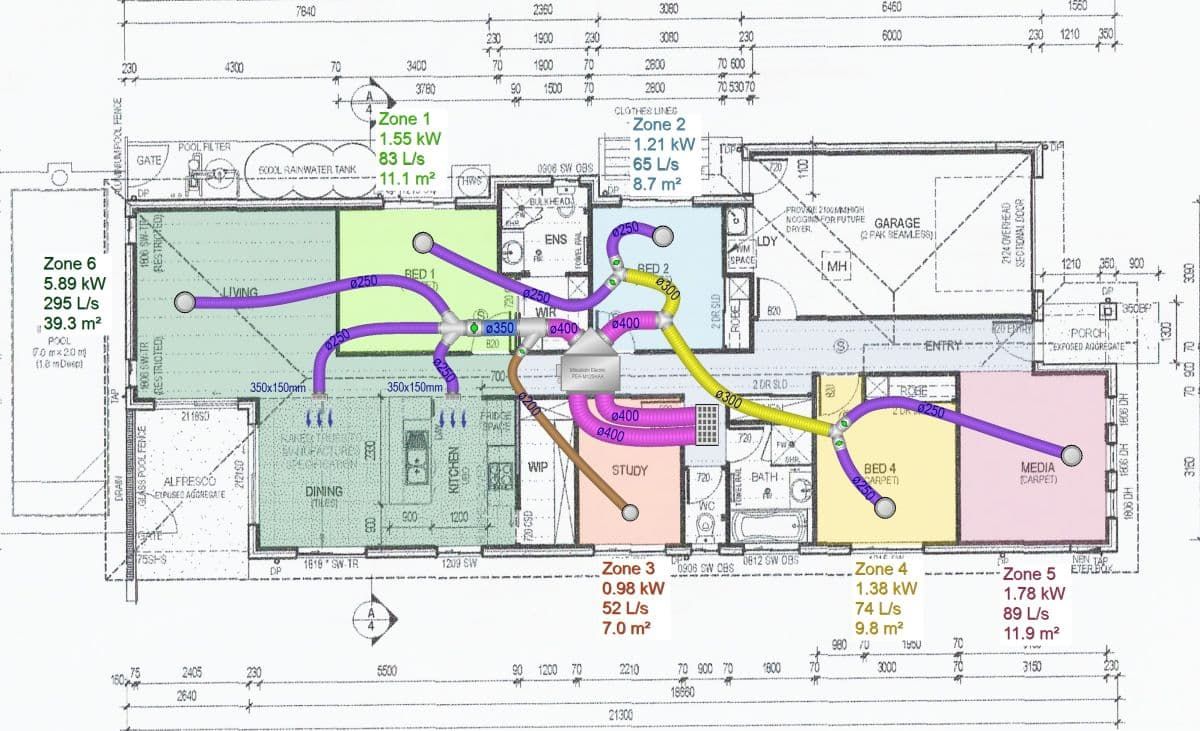
Measure the rooms you want to cool, but do not stop at floor area. Ceiling height, open-plan spaces, insulation, window size and orientation all change the load. A west-facing living area with large glass doors can need far more capacity than a shaded room the same size. An undersized system runs flat out and still struggles on a hot afternoon; an oversized one cycles on and off, wastes power and does a poor job of removing humidity. A proper heat load calculation, room by room, avoids both problems.
Consider the climate and weather
South East Queensland and the Northern Rivers are subtropical: hot, humid summers and mild winters with cool nights. That means you need strong cooling and good dehumidifying in summer, and a reverse-cycle system gives you efficient heating for the cooler months as well. Homes close to the beach also need to think about salt air, which corrodes outdoor units over time; corrosion protection is worth asking about if you can smell the sea from your yard.
Identify cooling zones and preferences
Think about how the household uses the house. Do you want bedrooms cool overnight and living areas cool during the day? Do different people like different temperatures? If so, a ducted system with zoning, or separate split systems in the key rooms, lets you cool only the spaces in use. That is better for comfort and cheaper to run than cooling the whole house all the time.
What types of air conditioning systems are there?
Most Australian homes choose between ducted reverse-cycle (often called central air in the US), wall-mounted split systems, and multi-head systems where several indoor units share one outdoor unit. All three are heat pumps: they move heat out of the house in summer and into it in winter, so they cool and heat from the same equipment.
Ducted air conditioning (central air)
A ducted system has one indoor unit hidden in the roof space and an outdoor unit outside. Insulated ducts carry air to discreet outlets in each room, and a zone controller such as ZoneTouch or AirTouch 5 opens and closes zones so you only condition the rooms you choose. It gives whole-home comfort, consistent temperatures and almost nothing on the walls.
Split systems (ductless)
A split system pairs one wall-mounted indoor unit with one outdoor unit. There is no ductwork, so they suit apartments, extensions, single rooms and homes without usable roof space. If you want several rooms on separate units but only one outdoor unit, a multi-head system does that. Other indoor styles include bulkhead units and ceiling cassettes.
Heat pumps (reverse cycle)
In Australia, “reverse cycle” is the everyday name for a heat pump air conditioner. Because it moves heat rather than making it, it uses much less electricity than resistive heaters for the same warmth. Almost every ducted and split system we install is reverse cycle, which suits the mild Gold Coast winter well.
What should you compare when selecting an air conditioning system?
Compare four things: energy efficiency on the Australian energy rating label, the features you will actually use, what the installation involves and costs, and the warranty on both the equipment and the workmanship. Price matters, but running costs and the quality of the installation decide whether the system is good value over its life.
Energy efficiency ratings
Ignore US terms such as SEER and ENERGY STAR; they do not apply here. Split systems sold in Australia carry the Zoned Energy Rating Label, which shows separate star ratings for cooling and heating and estimated yearly energy use for hot, average and cold climate zones. More stars mean lower running costs for the same output. For ducted systems the label is not always shown, so ask your installer for the model’s registered efficiency figures. Our guide to maximising energy efficiency explains more.
Advanced features and technologies
Inverter (variable-speed) compressors are now standard and are the biggest efficiency feature. Beyond that, look at Wi-Fi control, zone controllers with temperature sensors in each zone, dry (dehumidify) mode, and better filtration. If allergies are a concern, an air filter and sanitiser upgrade can be added to a ducted system. Our home automation page covers smart controls.
Installation requirements and costs
Ducted systems need roof space for the indoor unit and ducts, a suitable spot for the outdoor unit, and usually a dedicated electrical circuit. Split systems need a wall for the indoor unit and a short pipe run to the outdoor unit. Two-storey homes, flat roofs and tight roof spaces change what is possible. Because we have our own electricians, the electrical work is part of our quote rather than a separate trade. See air conditioning installation for how a job runs, and finance if you want to spread the cost.
Warranty and service plans
Read the manufacturer’s warranty on the units and ask the installer what they cover. Frost Solutions installs include a 10-year workmanship guarantee (covering the refrigerant charge and call-outs), a 10-year duct and pipework warranty, and 5-year parts and labour on the indoor and outdoor units, once the job is paid in full. Regular servicing keeps the system efficient and protects that cover.
What is the next step?
Selecting the right air conditioning system comes down to understanding your home, matching the system type and size to how you live, and comparing efficiency and warranty honestly. If you would like a second opinion, book a free quote or call us. We will look at the house, run the numbers room by room and explain the options in plain English.