
Why is regular air conditioning maintenance important?
Your air conditioner works hard through a Gold Coast summer, often for many hours a day. Like a car, it needs regular servicing to keep running well. Maintenance keeps it efficient, catches small faults before they become breakdowns, and protects what you spent on it.
Below we explain the benefits of regular maintenance, which jobs you can do yourself and which need a professional, and how often each should be done.
What are the benefits of regular maintenance?
Regular maintenance improves energy efficiency, keeps every room comfortable, extends the system’s life, reduces the chance of costly repairs and improves indoor air quality. It is about more than keeping the system running: it keeps it running well.
1. Improved energy efficiency
A clean, well-adjusted system uses less electricity to deliver the same cooling. That means lower bills and a smaller environmental footprint. Dirty filters and coils are among the most common causes of high running costs.
2. Enhanced comfort
A well-maintained system delivers cool air more evenly, so rooms reach the set temperature and stay there. It also removes humidity better, which matters on muggy coastal days.
3. Extended lifespan
Servicing finds and fixes minor issues, such as a loose connection, a blocked drain or a worn part, before they damage other components. That delays the cost of replacement. See our tips for maximising lifespan.
4. Fewer repairs
Dealing with problems early reduces the risk of a breakdown, and breakdowns tend to happen in the middle of a heatwave, when you most need the system and technicians are busiest.
5. Better indoor air quality
Clean filters, coils and drain trays mean less dust, fewer allergens and no musty smells blowing into your home. Read how to improve indoor air quality with your air conditioning.
What maintenance can you do yourself, and what needs a professional?
You can clean filters, keep the outdoor unit clear, check the controller and watch for warning signs. A licensed technician should clean coils and drains, check refrigerant, test electrical components and fans, and assess overall performance, because those jobs need tools, training and, for refrigerant, a licence.
1. DIY maintenance tips
- Clean or replace filters regularly to keep airflow up.
- Keep the outdoor unit clear of leaves, grass clippings and branches, and keep plants trimmed back.
- Check the controller settings and replace remote batteries when needed.
- Check outlets and return-air grilles are not blocked by furniture or curtains, and wipe them clean.
- Watch for unusual noises, water leaks or weaker cooling, and act promptly.
2. Professional services
- A full inspection and service by a licensed technician, usually once a year.
- Cleaning and inspecting internal components such as coils, fan and condensate drain.
- Checking moving parts for wear and lubricating where the design calls for it.
- Checking refrigerant pressures; if gas is low, finding and repairing the leak.
- Testing controls, sensors and electrical connections, and checking overall performance.
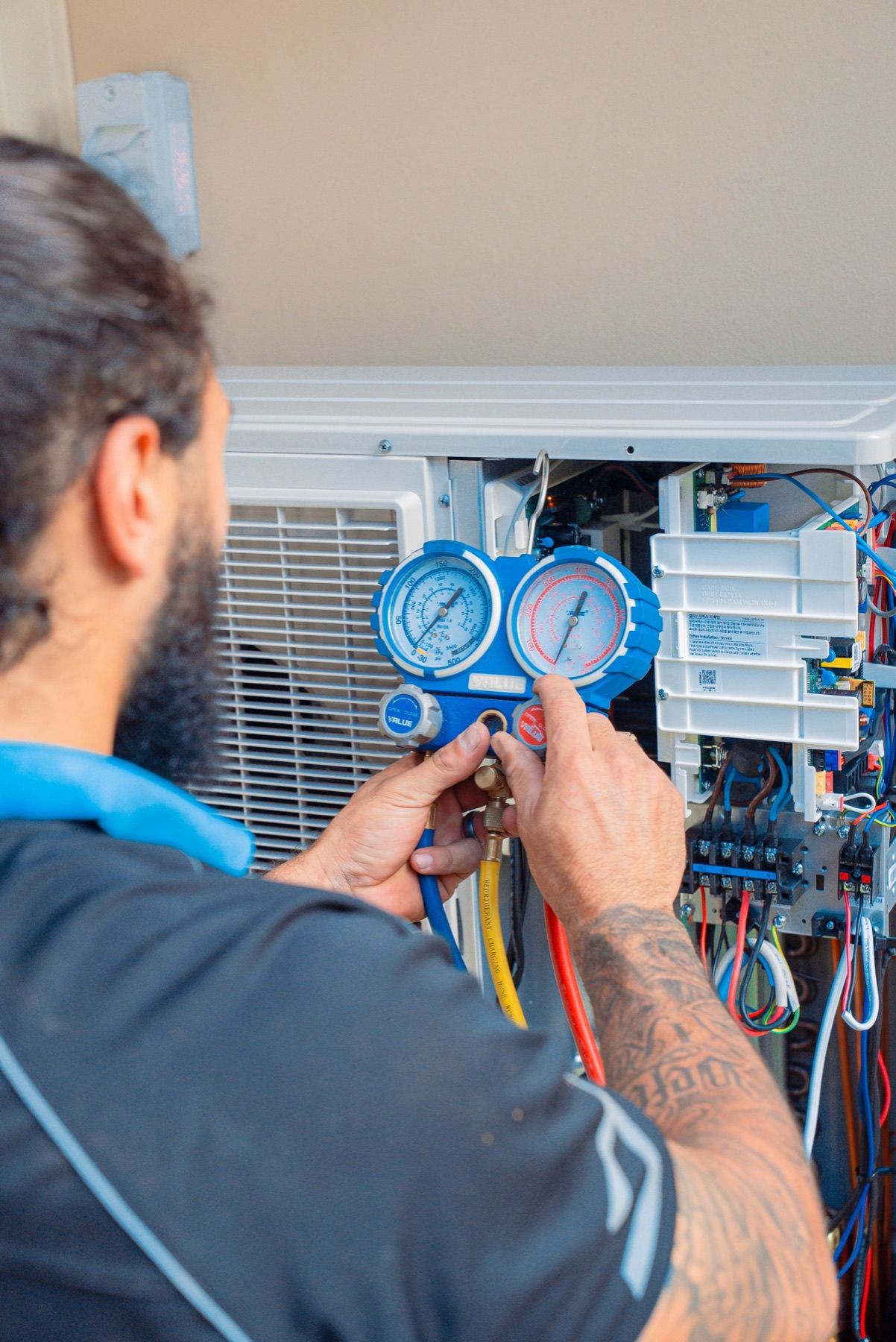
DIY care keeps the system in good shape between visits, but it does not replace a professional service. Near the beach, ask about corrosion protection for the outdoor unit as well.
How often should air conditioning maintenance be done?
Book a professional service at least once a year, ideally in spring before the peak cooling season. Clean filters every few weeks to every few months depending on the system and how hard it runs, keep the outdoor unit clear year-round, and check the controller whenever your routine changes.
The right frequency depends on the system’s age, how much you use it and its surroundings. A system near the beach, under trees or running most of the day needs more attention than one used occasionally. During the service, the technician checks everything and tells you about anything that needs attention. Some tasks should be done more often:
1. Changing or cleaning filters
Depending on the filter type, clean or change it every few weeks to every three months, and more often during heavy summer use.
2. Cleaning the outdoor unit
Check the outdoor unit regularly and remove debris or plants that block airflow. Do not use a high-pressure hose on the coil fins.
3. Checking controller settings
Check the set temperature, mode and timers, and replace batteries as needed. Update schedules when your routine changes.
4. Monitoring performance
Keep an eye and an ear out for strange noises, weak airflow or uneven cooling. Dealing with them early stops them becoming bigger problems. Our troubleshooting guide can help.
What is the bottom line?
Regular maintenance is the simplest way to keep your air conditioner efficient, comfortable and reliable for longer. Combine your own simple checks with an annual professional service, and do not wait for a breakdown. Book a service online or give us a call.