
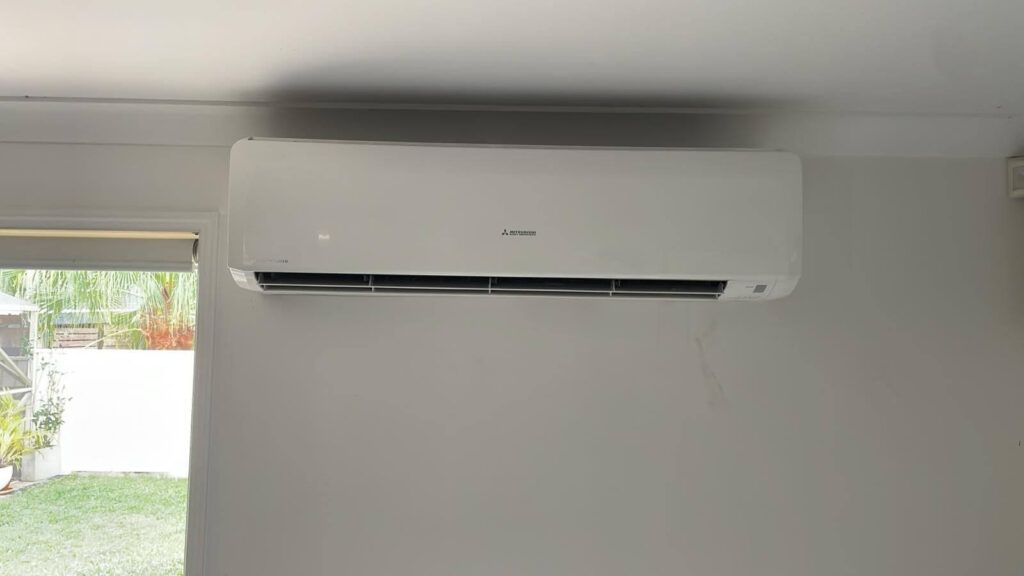
Why do air conditioners develop problems?
Air conditioners are built to be reliable, but they are mechanical systems that work hard, especially through a long Gold Coast summer. Dust, salt air, blocked drains, worn parts and installation faults all cause problems. Knowing the common symptoms and simple checks helps you fix small issues yourself and spot when you need a technician.
Below are the most common air conditioning problems, their usual causes and practical troubleshooting steps, followed by the faults you should always leave to a professional and how to prevent problems in the first place.
What are the most common air conditioning problems?
The problems we are called out for most often are poor airflow, strange noises, insufficient cooling, water leaks, foul odours and short cycling. Many start with a dirty filter or coil; others point to a refrigerant leak, a failing part or a system that was sized or installed incorrectly.
Poor airflow
Causes: a clogged filter, blocked outlets or return-air grilles, dirty indoor or outdoor coils, or crushed or disconnected ducts. Troubleshooting: clean or replace the filter, move furniture or curtains away from vents, and check that zones are open on the controller. If airflow is still weak, book a professional coil clean or a duct inspection.
Strange noises
Causes: loose panels or screws, a worn fan motor or bearing, debris in the outdoor fan, or compressor problems. Hissing or bubbling can indicate a refrigerant leak. Troubleshooting: check for anything caught in or touching the outdoor unit, and see whether a cover panel is loose. If you cannot find the source, switch the system off and call a technician; running with a mechanical fault often causes more damage.
Insufficient cooling
Causes: the wrong mode or setting, a dirty filter or coil, low refrigerant from a leak, a system that is too small for the space, or a failing compressor. Troubleshooting: check the controller is in cool mode with a set temperature below room temperature, clean the filter, and make sure the outdoor unit is not blocked or in direct afternoon sun with no airflow. Then book maintenance or a leak check if it still struggles.
Water leaks
Causes: a blocked condensate drain, a frozen indoor coil, a cracked tray or poor installation (for example, a drain without enough fall). Troubleshooting: switch the system off to protect ceilings and walls. If the coil is iced, let it thaw with the fan running and clean the filter. A blocked drain needs clearing; if leaks persist, call a technician.
Foul odours
Causes: mould or mildew on the indoor coil, fan or drain tray, or stagnant water in the tray. Humid coastal conditions make this common. Troubleshooting: clean the filter, then book a professional coil and drain clean. For ducted systems, a UV sanitiser helps keep the coil clean.
Short cycling
Causes: an oversized system, a faulty controller or sensor, restricted airflow, or low refrigerant. Troubleshooting: check the controller settings and batteries, clean the filter, and make sure the controller or room sensor is not in direct sun or near a heat source. If the system was sized wrongly, the long-term fix is a correctly sized replacement.
When should you call a professional?
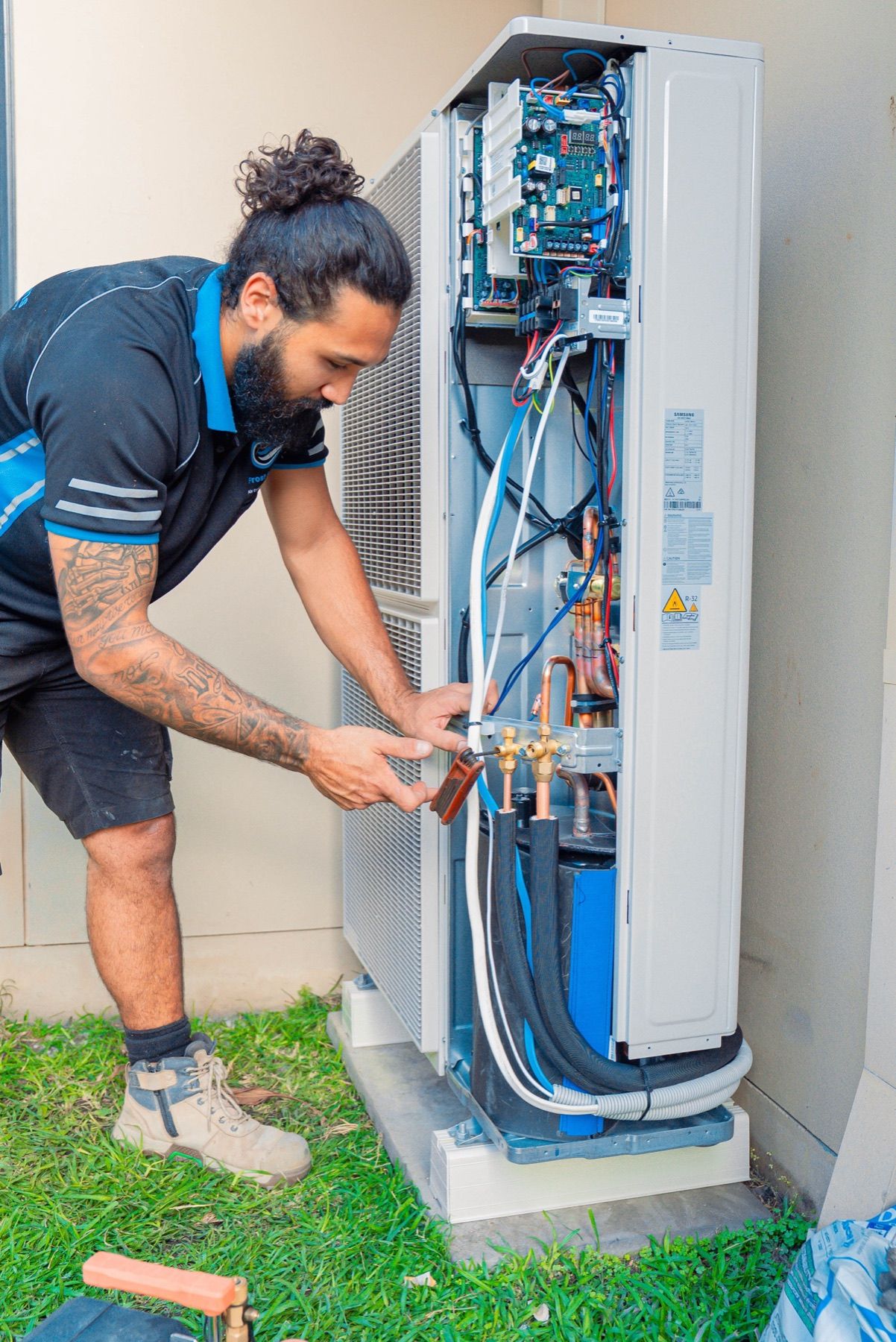
Call a licensed technician for anything involving refrigerant, electrical faults, the compressor, or a system that keeps breaking down. These jobs need specialist equipment and licences, and getting them wrong can be dangerous or damage the system further.
- Refrigerant leaks: only ARC-licensed technicians may handle refrigerant. A leak needs to be found and repaired, then the system re-charged. See leak repairs.
- Electrical issues: tripping breakers, burning smells or scorched wiring are a safety hazard. Switch off at the isolator and call a licensed electrician; our own electricians handle air conditioning circuits.
- Compressor failure: the compressor is the heart of the system. Diagnosing and replacing it needs professional tools and expertise.
- Replacement: if the system is old, uses R22, or keeps breaking down, a replacement may cost less than ongoing repairs.
How can you prevent air conditioning problems?
Have the system serviced every year, clean filters regularly, keep the outdoor unit clear of leaves and plants, and act early when you notice changes in noise, airflow or cooling. Prevention is cheaper than a breakdown in a heatwave.
- Regular maintenance: an annual professional service catches problems before they escalate. See air conditioning maintenance.
- Clean filters: clean or replace filters to keep airflow up and dust down.
- Keep the outdoor unit clear: remove leaves and vegetation, and keep plants trimmed back so it can breathe. Near the beach, ask about corrosion protection.
- Monitor performance: notice reduced airflow or unusual noises and get them checked promptly.
What is the bottom line?
Common air conditioning problems disrupt comfort and push up running costs if they are left alone. Simple checks fix many of them; the rest need a licensed technician. Keep up with maintenance, deal with problems early and call us when you need help. Book a repair or service online or by phone.