
Why choose energy-efficient cooling?
Cooling is one of the biggest electricity loads in a Queensland home over summer. An efficient system and good habits cut that load, which lowers bills and emissions without giving up comfort. Small choices, such as the set temperature and which rooms you cool, often make as much difference as the equipment.
With electricity prices rising and more people thinking about their environmental footprint, homeowners want to stay comfortable while using less power. This guide looks at high-efficiency air conditioning, alternative cooling technologies and practical habits that save energy, with a focus on what works in a humid subtropical climate.
What makes an air conditioning system high efficiency?
High-efficiency systems use an inverter (variable-speed) compressor, carry a high star rating on the Australian energy label, and are sized and installed correctly for the home. Ductless splits avoid duct losses, while well-designed ducted systems with zoning avoid cooling empty rooms. Reverse cycle adds efficient heating from the same unit.
Energy star ratings (not SEER)
You may see the US SEER rating and ENERGY STAR mentioned online, but neither applies to products sold in Australia. Here, air conditioners carry the Zoned Energy Rating Label, with separate star ratings for cooling and heating and estimated yearly energy use for hot, average and cold climate zones. A higher star rating means lower running costs for the same output. Comparing labels is the simplest way to compare efficiency between split system models; for ducted systems, ask your installer for the model’s registered figures.
Variable-speed (inverter) compressors
A variable-speed compressor speeds up and slows down to match the cooling the room needs, instead of switching fully on and off. It holds the temperature more steadily, uses less power once the room is comfortable, and runs more quietly. Almost all current split and ducted systems from the major brands use inverter compressors.
Ductless split systems
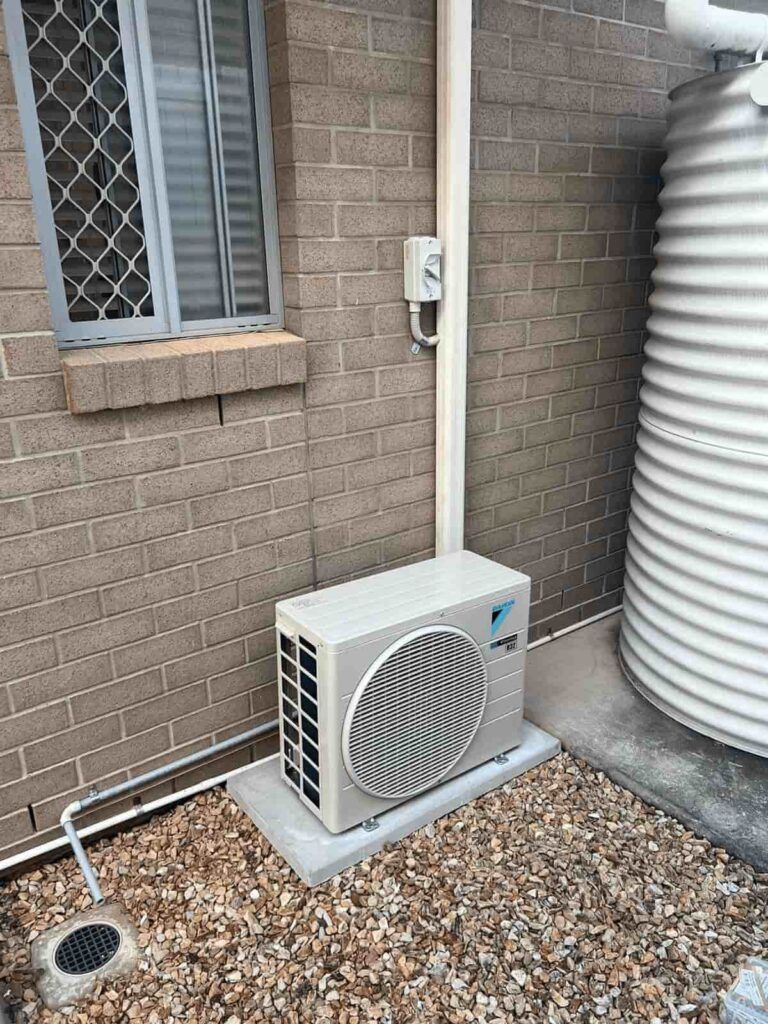
A split system has an outdoor unit and a wall-mounted indoor unit, with no ductwork. Because there are no ducts, there are no duct losses, and you cool only the room the unit is in. For several rooms, separate splits or a multi-head system give room-by-room control.
Heat pumps (reverse cycle)
Reverse-cycle air conditioners are heat pumps: they move heat out of the house in summer and into it in winter. Because they move heat rather than generate it, they deliver several units of heating or cooling for each unit of electricity. In the mild Gold Coast and Northern Rivers climate that makes them one of the cheapest ways to heat as well as cool.
Are there alternative cooling technologies worth considering?
Evaporative coolers, geothermal systems and solar power are the main alternatives. Evaporative cooling suits dry inland heat better than humid coastal summers. Geothermal is rare and costly for Australian homes. Solar does not replace an air conditioner, but it is a very effective way to power one during the day.
Evaporative coolers
Evaporative coolers pass air over wet pads, cooling it as the water evaporates. They use little electricity and work well in dry heat, but they add moisture to the air and lose much of their effect when the air is already humid, as it is on a typical coastal summer day. Read more about evaporative cooling.
Geothermal cooling systems
Ground-source (geothermal) heat pumps use the stable temperature underground to heat and cool very efficiently. They need drilled bores or buried loops, which makes them expensive to install, so they are uncommon in Australian homes. For most households, a high-efficiency air-source reverse-cycle system gives better value.
Solar-powered air conditioning
Rooftop solar panels generate the most power in the middle of the day, which matches summer cooling demand well. Running your air conditioner while the panels are producing uses your own power rather than the grid, and a home battery can carry some of it into the evening. We also offer solar and batteries alongside air conditioning.
How can you save energy with the system you already have?
Set cooling to about 25–27°C, run ceiling fans so you feel cooler at a higher setting, cool only the rooms in use, keep doors and blinds closed on hot days, seal and insulate ducts, and have the system serviced so it runs at its rated efficiency.
Optimise your temperature settings
The Australian Government’s energy advice is to set cooling between 25 and 27°C. Every degree cooler makes the system work harder and costs more. Raise the setting or switch zones off when you are out or asleep in rooms you are not using; a timer or smart controller makes this automatic.
Use ceiling fans
Moving air feels cooler on skin, so a ceiling fan lets you set the air conditioner a couple of degrees higher without feeling the difference. Fans use a small fraction of the power of an air conditioner and help spread cooled air through the room.
Seal and insulate ductwork
Ducts run through the roof space, which can be very hot in summer. Leaking joints and thin insulation let cooled air escape and heat in before it reaches the rooms. Sealed, well-insulated ducts deliver more of what you pay for. If your ducts are old, damaged or kinked, see ductwork replacement and repairs.
Schedule regular maintenance
Dirty filters and coils, low refrigerant and blocked drains all reduce efficiency. Cleaning filters regularly and booking a professional service keeps the system running at its rated performance, reduces breakdowns and extends its life.
What is the takeaway?
Energy-efficient cooling lets you stay comfortable while using less power and paying less. Choose an efficient, correctly sized inverter system, consider solar to power it, and use simple habits to cut waste. If you want help choosing or upgrading, get a free quote and we will recommend the most efficient option for your home.